
Search Ohio Bankruptcy Records
Ohio bankruptcy records are federal court documents filed in the Northern and Southern Districts of Ohio. You can search for them online through PACER or visit one of the bankruptcy court offices in person. The state has 88 counties split between the two districts. The Northern District runs five offices in Cleveland, Akron, Canton, Toledo, and Youngstown. The Southern District has locations in Columbus, Cincinnati, and Dayton. Each court keeps case files, docket sheets, and all papers tied to a filing. If you need to look up a case or get copies of bankruptcy records in Ohio, the tools and steps on this page will help you start your search.
Ohio Bankruptcy Records Overview
Where to Find Ohio Bankruptcy Records
All bankruptcy cases in Ohio go through the federal court system. The state is split into two districts. The U.S. Bankruptcy Court for the Northern District of Ohio covers the top 40 counties and serves about six million people. It keeps five offices open in Akron, Canton, Cleveland, Toledo, and Youngstown. Each office is open to the public Monday through Friday from 9:00 a.m. to 4:00 p.m. You can walk in to view records, use public terminals, or talk to a clerk. The main hub sits in the Howard M. Metzenbaum U.S. Courthouse at 201 Superior Avenue in Cleveland. Call (216) 615-4300 for help with records from that office.
The U.S. Bankruptcy Court for the Southern District of Ohio handles cases from the lower 48 counties. As of January 2026, filings in the Southern District were up 18.1% from the year before. The court has offices in Columbus, Cincinnati, and Dayton. Both districts use the CM/ECF system for case management. The Northern District moved to NextGen CM/ECF on August 2, 2021, and added multifactor authentication in May 2025 to keep records safe.
The Northern District of Ohio operates the main Cleveland office along with the Akron location at the John F. Seiberling Federal Building, 2 South Main Street, Akron, Ohio 44308, phone (330) 252-6100. The Canton office sits in the Ralph Regula Federal Building at 401 McKinley Avenue S.W., Canton, Ohio 44702, phone (330) 458-2120. Toledo is at the PNC Bank Building, 405 Madison Avenue, Toledo, Ohio 43604, phone (419) 213-5600. The Youngstown office is in the Nathaniel R. Jones Federal Building at 10 East Commerce Street, Youngstown, Ohio 44503, phone (330) 742-0900.
Below is the homepage for the Northern District Bankruptcy Court, which shows case access tools and court locations for Ohio bankruptcy records.
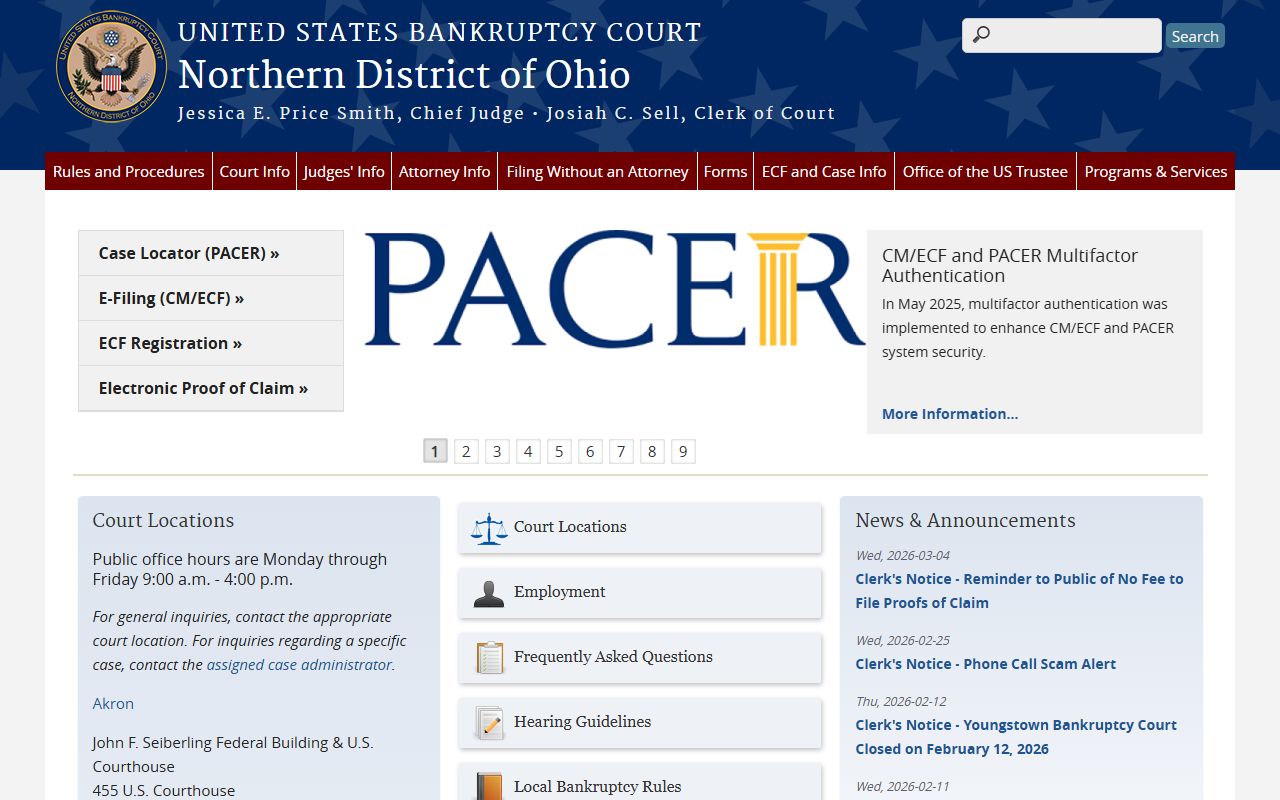
The site provides links to case filing, court locations, and local rules for the Northern District.
Note: Ohio bankruptcy records are federal court records, not state court records. You will not find them at a county clerk's office or state agency.
How to Search Bankruptcy Records in Ohio
The main way to search Ohio bankruptcy records online is through PACER. This is the federal court system's public access tool. Anyone can sign up for an account and search for case files, docket sheets, and court documents from any bankruptcy court in the country. PACER charges $0.10 per page with a cap of $3.00 per document. Users who run up less than $30 in a quarter pay nothing at all. Court opinions are free for all account holders. You can reach the PACER support line at (800) 676-6856 or email pacer@psc.uscourts.gov.
Below is the PACER public access portal where you can register and begin searching Ohio bankruptcy records.
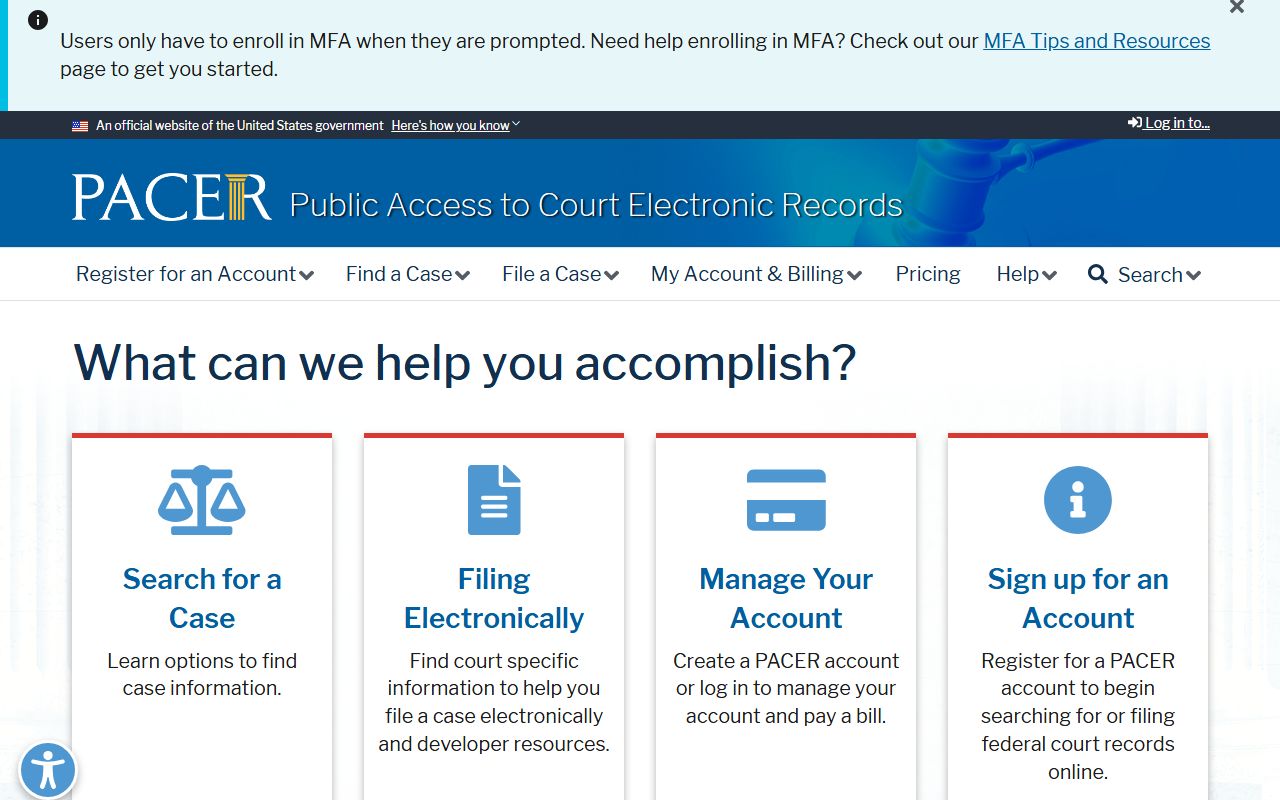
From this page you can create an account, look up cases, and view docket entries for both Ohio districts.
If you know which court handled the case, you can go straight to that court's ECF system. The Northern District ECF system is at ecf.ohnb.uscourts.gov. If you don't know the court, use the PACER Case Locator. It updates at midnight each day and lets you search all federal courts at once. The Northern District case information page spells out all the ways you can pull up records from that court.
The Northern District case information page shows PACER, McVCIS, and in-person access options for Ohio bankruptcy records.
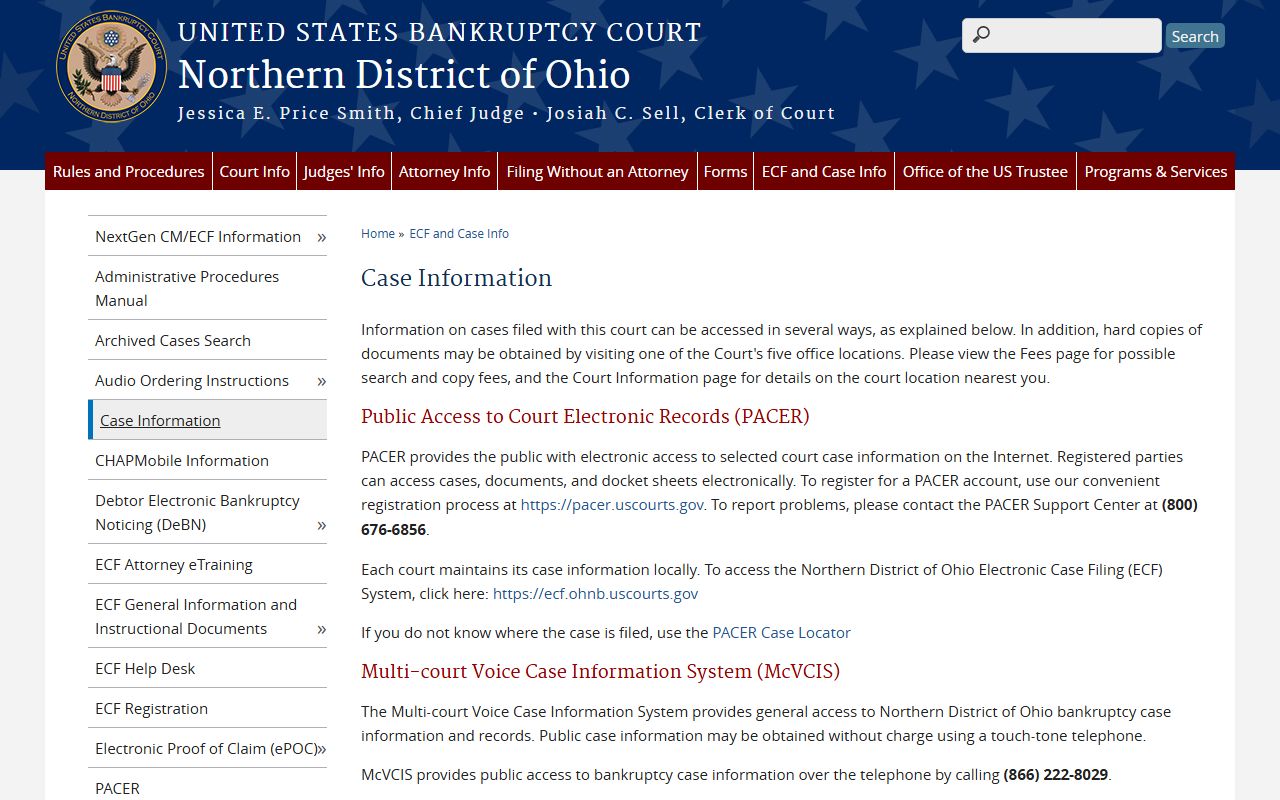
This page gives details on each method, plus contact info for archived records.
You can also call the Multi-court Voice Case Information System (McVCIS) at (866) 222-8029. This free phone line is open 24 hours a day. Say "Ohio" then "Ohio Northern" to get to Northern District records. You can search by case number, name, or Social Security Number. Up to 5 queries per call are allowed. For in-person access, visit any of the court's offices during business hours. Public terminals at the courthouse let you view electronic case files for free. Printing costs $0.10 per page.
Below you can see the court locations for the Northern District, which lists all five Ohio bankruptcy records offices.
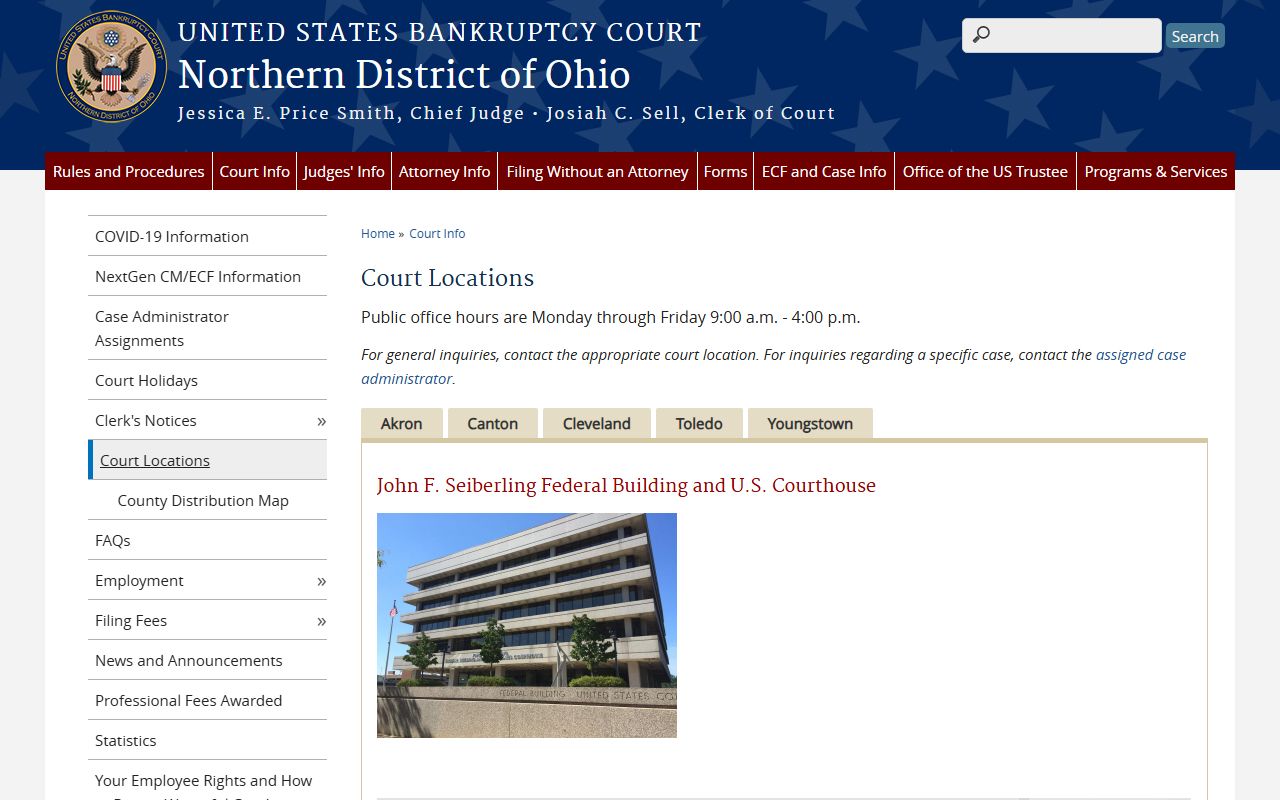
All five offices are listed with full addresses and phone numbers for records help.
Ohio Bankruptcy Records and Public Access
Bankruptcy filings are public records. Under 11 U.S.C. § 107, papers filed in a bankruptcy case and the dockets of the court are open to review by any person at fair times and at no charge. The term "docket" here covers the claims docket, the proceedings docket, and all papers in the case. This is a broad right. You do not need to be a party to the case. You do not need a reason to look.
This screenshot shows the text of 11 U.S.C. § 107 on public access to Ohio bankruptcy records and court papers.
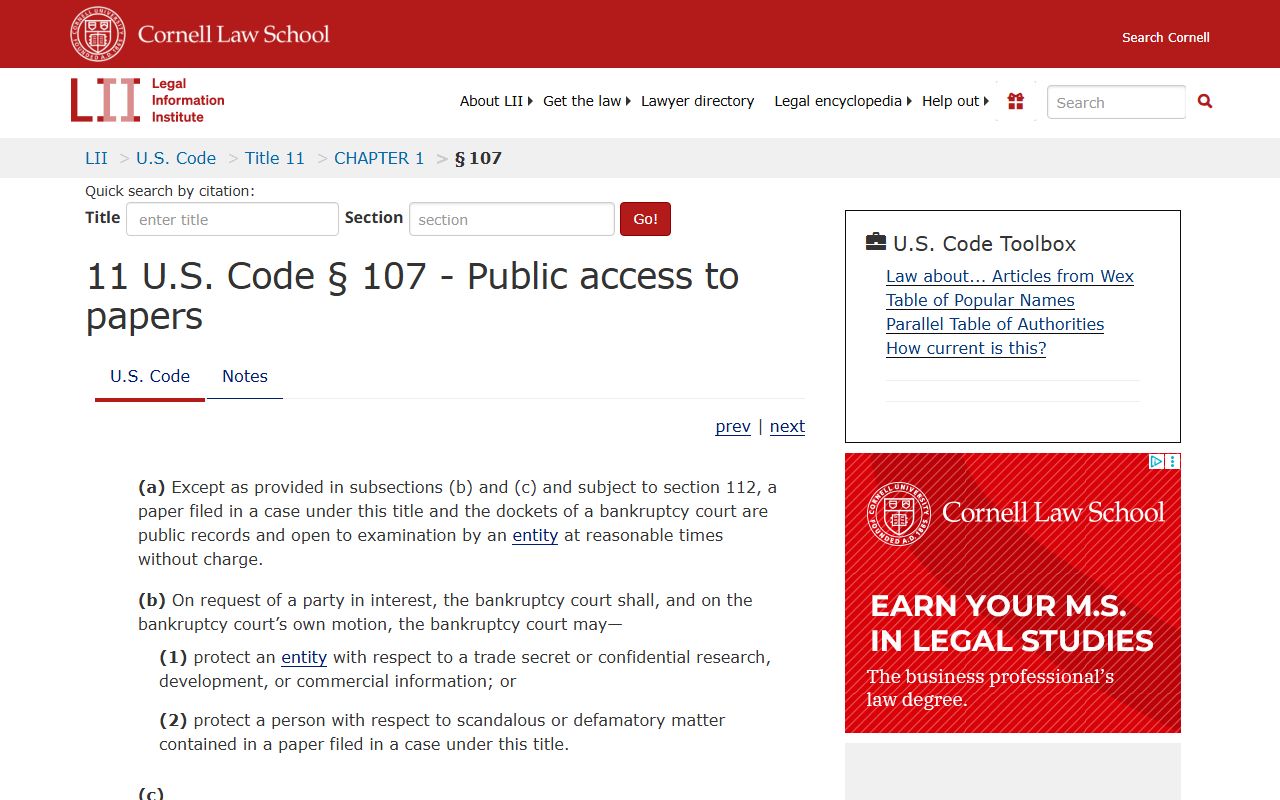
The statute lays out the full scope of public access rights and the few times when the court can limit them.
There are a few limits. The court can seal trade secrets and confidential commercial data under Section 107(b). It can also block scandalous or defamatory material. Section 107(c) lets the court protect personal data like Social Security numbers if disclosure would risk identity theft. Under Fed. R. Bankr. P. 9037, filers must redact sensitive info. Only the last four digits of a Social Security number, the birth year, a minor's initials, and the last four digits of account numbers can show on public filings.
The privacy protection rule 9037 lays out redaction rules that apply to all Ohio bankruptcy records filings.
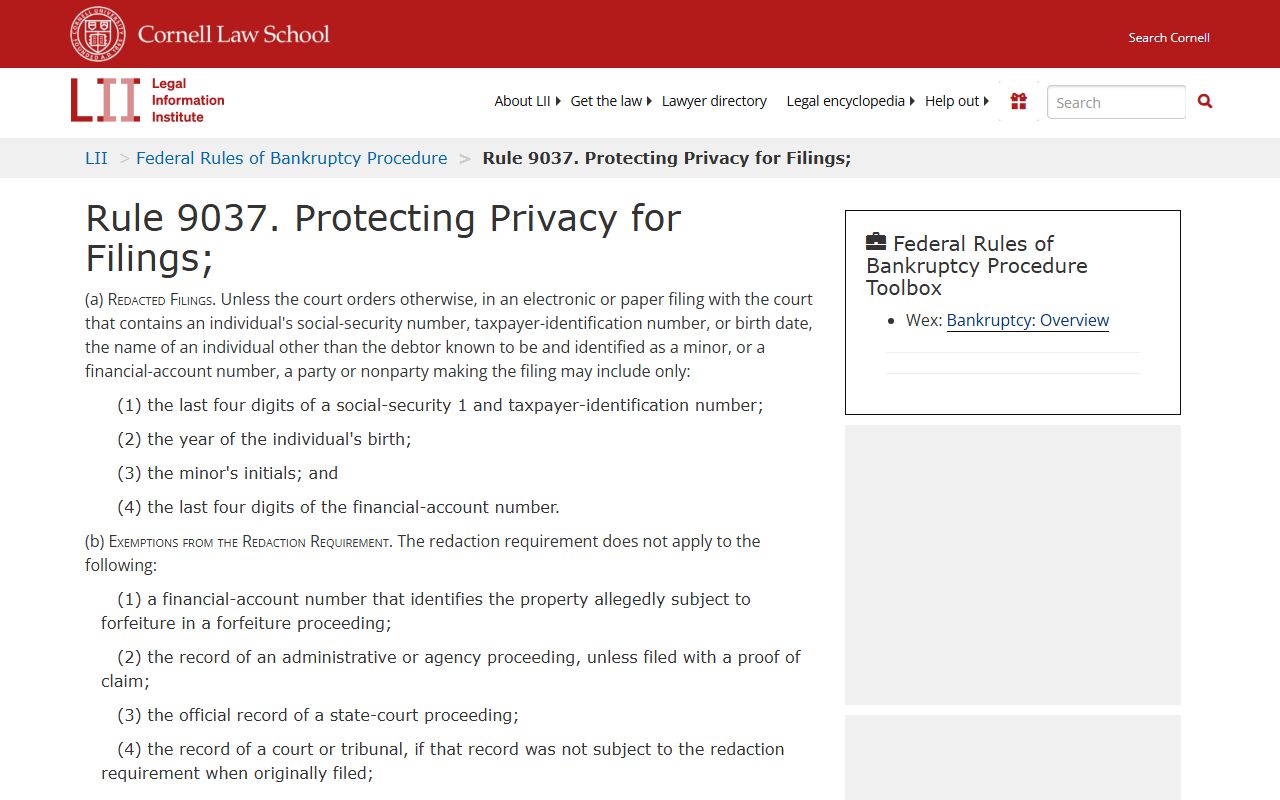
Filers bear the duty to redact. The court does not check each filing for compliance.
Fed. R. Bankr. P. 5003 requires the clerk to keep a docket in each case and to log every judgment, order, and activity. The clerk must also keep a claims register when there will be a distribution to unsecured creditors. These record-keeping rules make sure Ohio bankruptcy records stay complete and available.
Rule 5003 on record-keeping standards is shown here and details what the clerk must track in Ohio bankruptcy records.
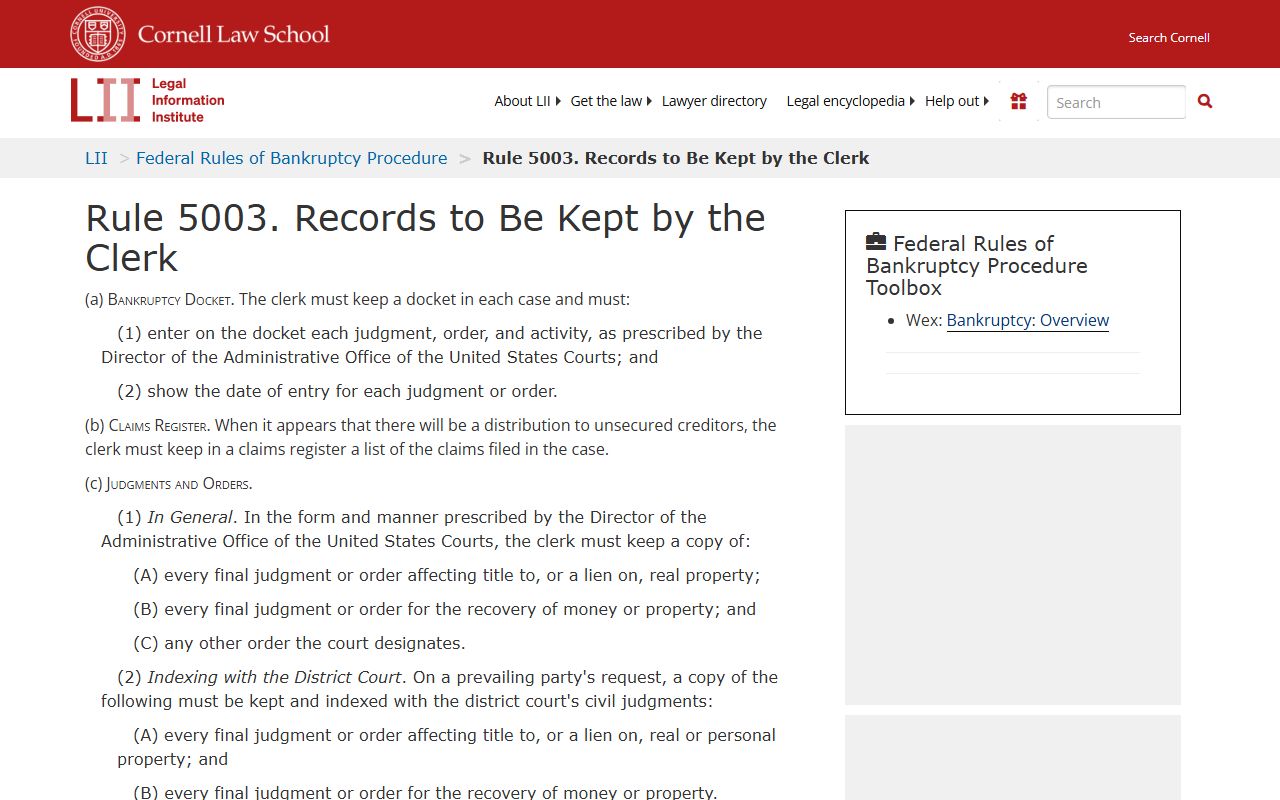
The rule covers docket entries, claims registers, and indexes that courts must maintain.
Types of Bankruptcy Records in Ohio
Ohio bankruptcy records fall under several chapters of the U.S. Bankruptcy Code. Each type creates a different kind of case file. The most common for individuals is Chapter 7, which involves selling assets to pay debts. The filing fee for Chapter 7 is $245 under 28 U.S.C. § 1930. Chapter 13 sets up a repayment plan and costs $235 to file. Businesses often use Chapter 11 for reorganization at $1,167 per filing. Family farmers and fishermen can use Chapter 12 at $200.
A bankruptcy case file typically holds the petition, schedules of assets and debts, the meeting of creditors notice, and the discharge order. Under Fed. R. Bankr. P. 2002, creditors must get at least 21 days notice of the meeting of creditors. That notice includes the debtor's name and case number. The case file grows as motions, orders, and proofs of claim get added. The final discharge order marks the end of the case for most filings.
You can find Ohio bankruptcy records for all these case types:
- Chapter 7 cases for individual or business liquidation
- Chapter 13 repayment plans for wage earners
- Chapter 11 business reorganizations
- Chapter 12 filings for family farmers and fishermen
- Chapter 9 municipal debt adjustments
- Chapter 15 cross-border insolvency cases
Fee waivers exist for people who earn less than 150% of the poverty line and can show they are unable to pay in installments. The court uses forms in the 100 series for individual or joint filings and the 200 series for businesses, partnerships, or LLCs. Sole proprietors use the 100 series forms.
This screenshot shows the fee schedule under 28 U.S.C. § 1930, which sets Ohio bankruptcy records filing costs.
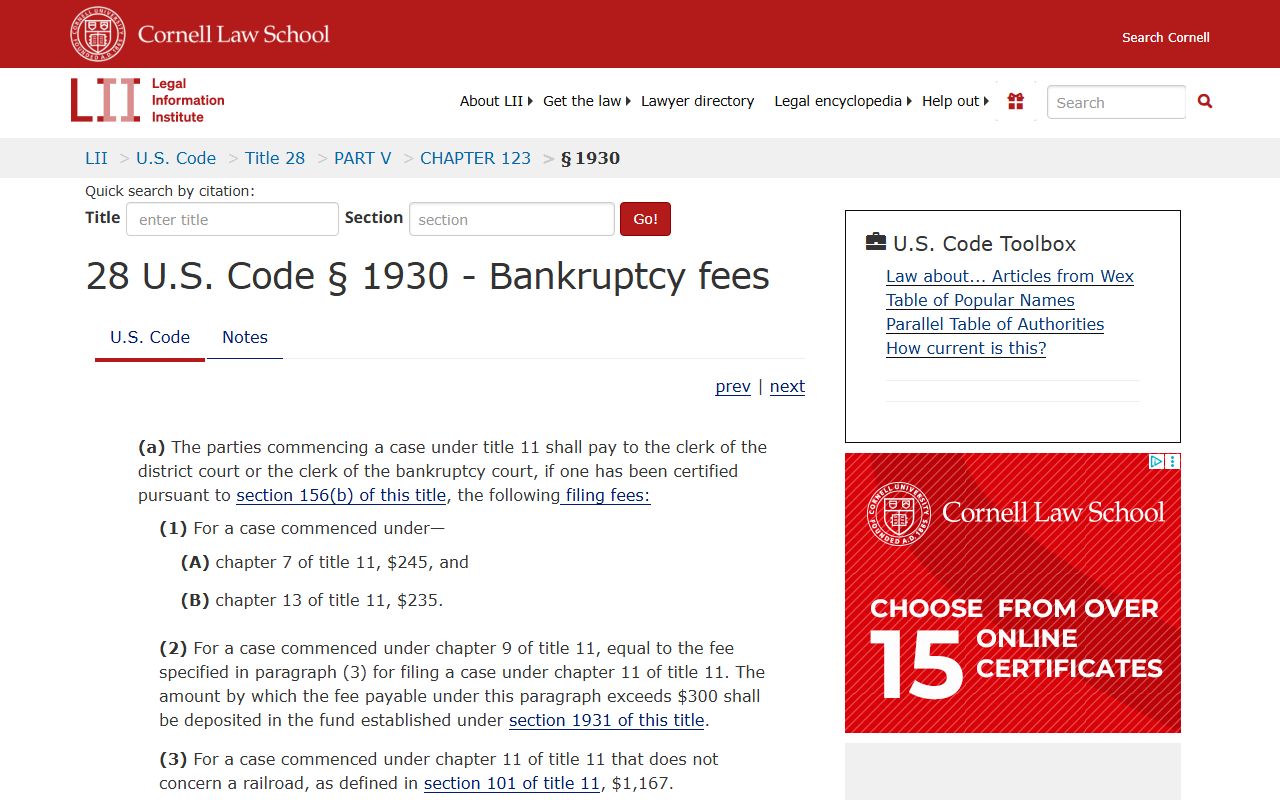
The statute breaks down fees by chapter type, along with rules for installment payments and fee waivers.
Archived Ohio Bankruptcy Records
Older Ohio bankruptcy records end up at the National Archives at Kansas City. All bankruptcy case files from federal courts across the country are stored there. Right now, NARA holds about 125,000 cubic feet of bankruptcy files in Kansas City. These records sit in Record Group 21 (U.S. District Court) and Record Group 578 (U.S. Bankruptcy Court). The collection grows each year as courts transfer closed cases.
To get copies, you need the court name, case number, party names, and the time frame of the filing. Cases from 1940 and after also need a Federal Records Center transfer number, which you can get from the court that handled the original filing. There is no charge to search. Copies cost $0.80 per page with a $20.00 minimum for mail orders. On-site copies run $0.25 each. You can email requests to kansascity.archives@nara.gov or call 816-268-8000.
Below is the NARA page on bankruptcy case files, showing how to request archived Ohio bankruptcy records.
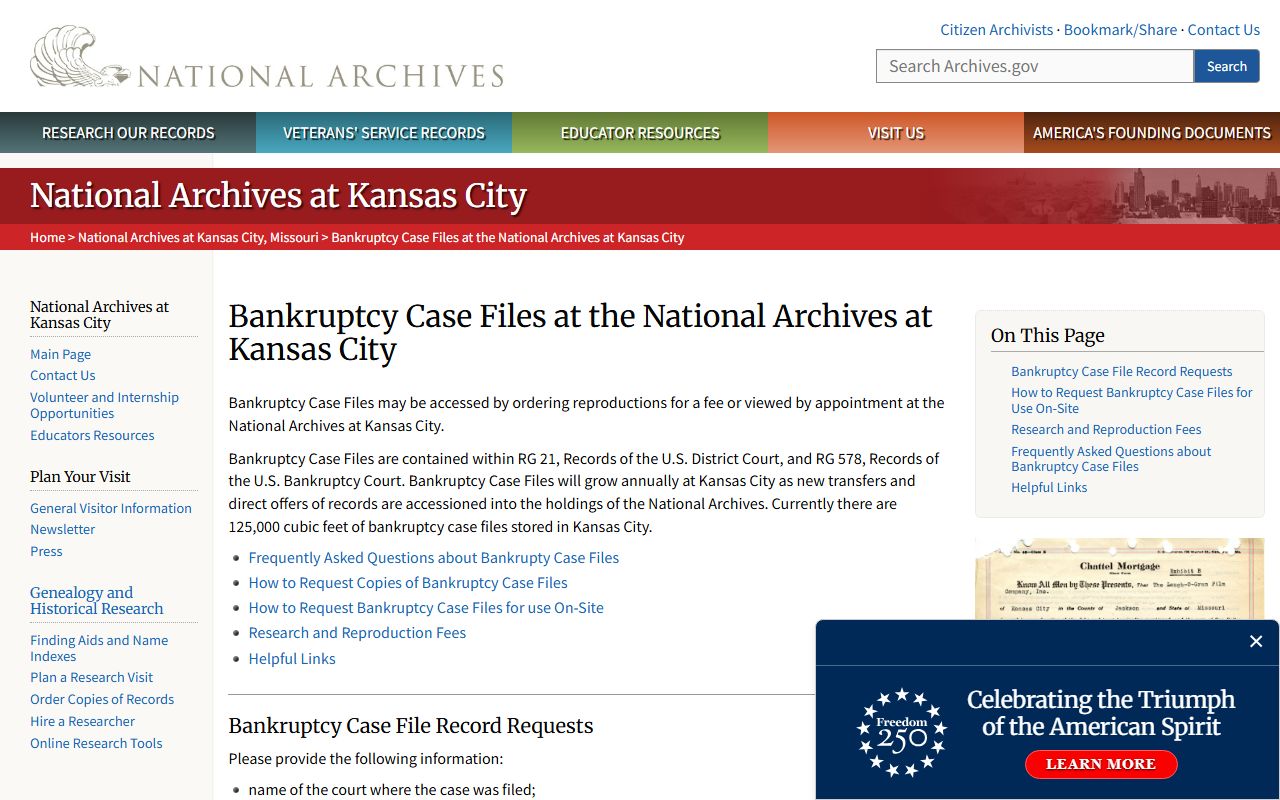
NARA provides full details on ordering, fees, and research room hours at Kansas City.
Cases filed before 1999 are mostly in paper form only. For those, you contact the court or visit a Federal Records Center. There is a $64 fee to pull a file from a Federal Records Center for review. The NARA court records page notes that federal court records span over 200 years and total more than 2.2 billion pages across all NARA locations.
The general NARA court records page shown here covers how to find archived Ohio bankruptcy records at federal facilities.
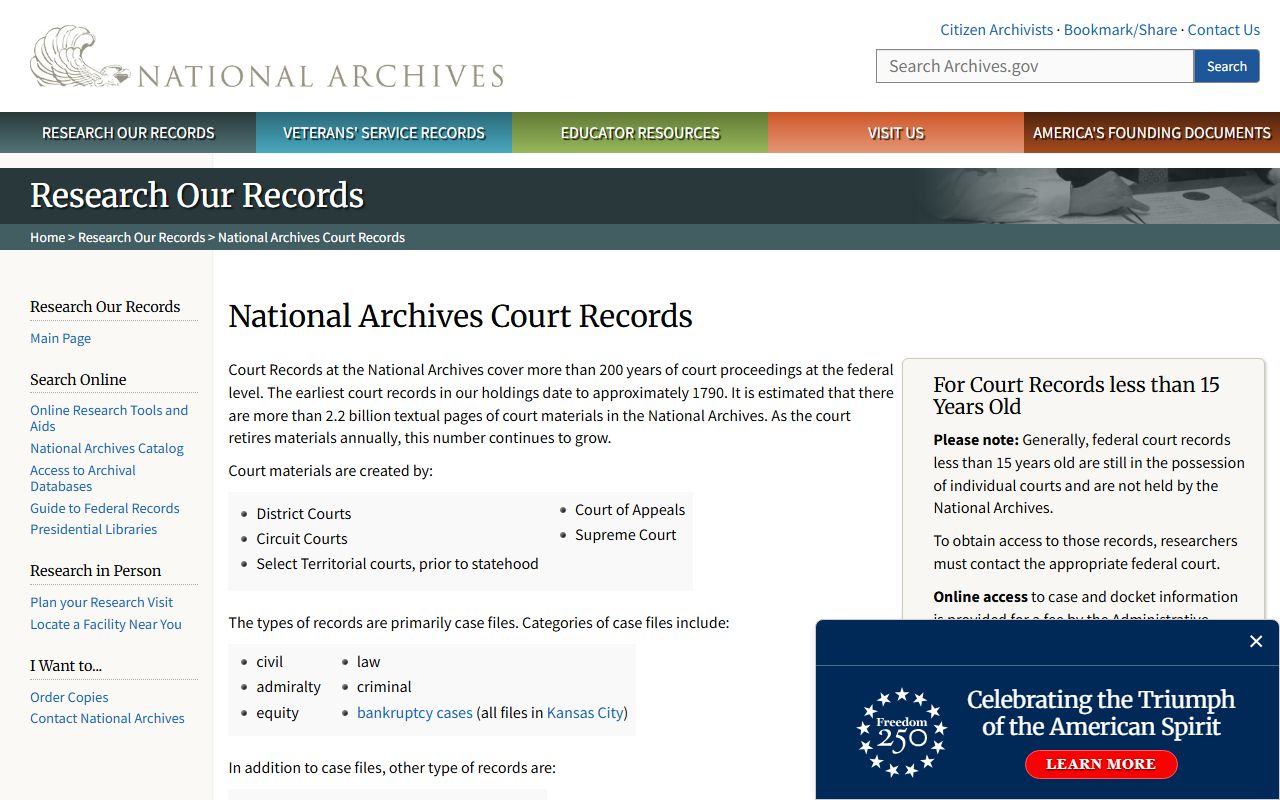
This page also explains how to tell if records are still at the court or have been moved to archives.
Bankruptcy case files from 1940 and earlier are kept as permanent records. Files opened after 1940 may be sampled at a 2.5% rate depending on the filing type. These old files can be useful for genealogy and research. They show what people owned and owed at the time, which gives a window into their lives beyond just names and dates. The research room in Kansas City is open Monday through Friday, 8 a.m. to 4 p.m. You need to book at least two business days ahead.
Ohio Bankruptcy Records Research Tools
The Federal Judicial Center Integrated Database (IDB) is a free tool for researchers. It holds case data for bankruptcy, civil, criminal, and appellate cases from 1970 to the present. The IDB does not have actual documents, but it gives you case-level data like filing dates, case types, and outcomes. This is a good way to narrow your search before using PACER, so you don't rack up page fees. You can reach the IDB team at IDBonline@fjc.gov for questions about the data or how to use it.
The Federal Judicial Center IDB page is shown here and offers free case data that can help focus your Ohio bankruptcy records search.
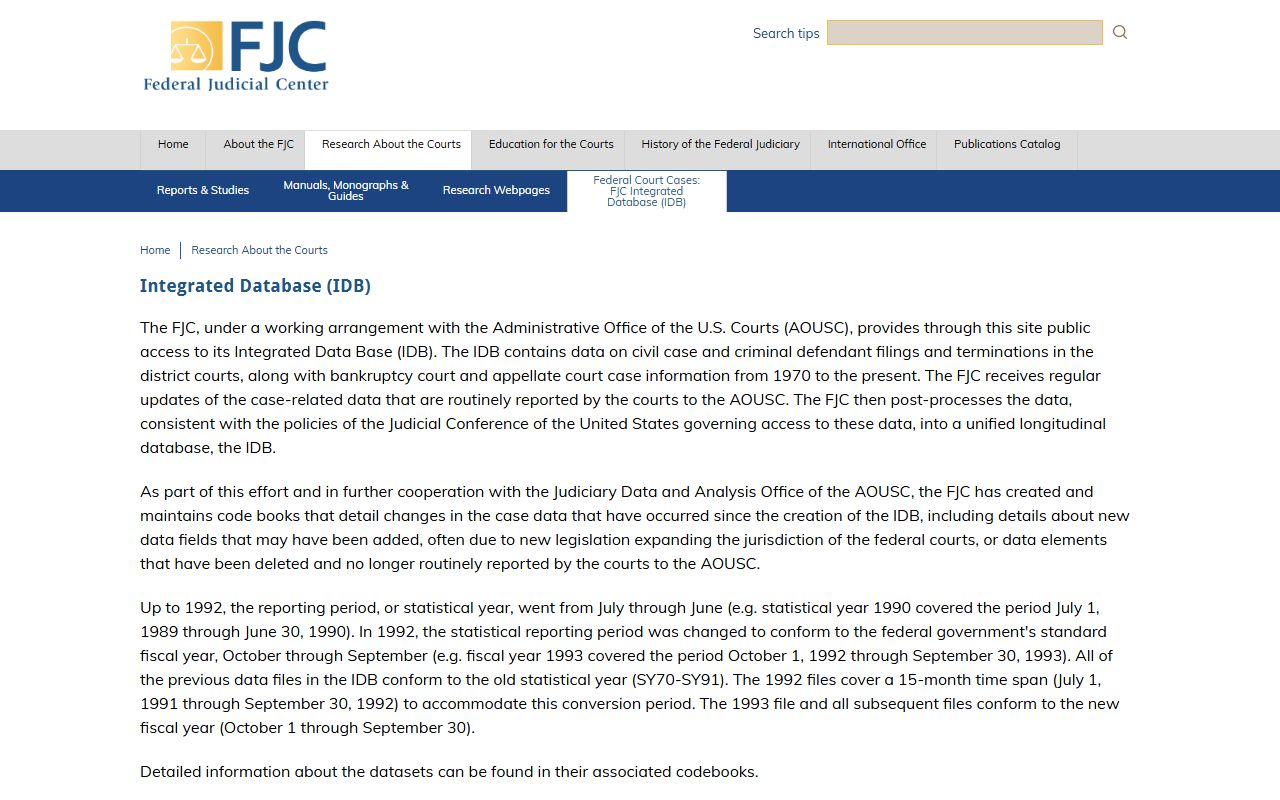
Researchers can download data in SAS format or tab-delimited text, or use the online query tool.
The Southern District Bankruptcy Court has noted a significant rise in filings. Cases have gone up 18.1% compared to the prior year. The court has brought back recalled judges to handle the extra load. If you are looking through Ohio bankruptcy records from the Southern District, be aware the court has also warned about scam calls where people pretend to be court officials. The court will never call and ask for payment over the phone.
Below is the Southern District of Ohio Bankruptcy Court site, which posts alerts and updates on Ohio bankruptcy records access.
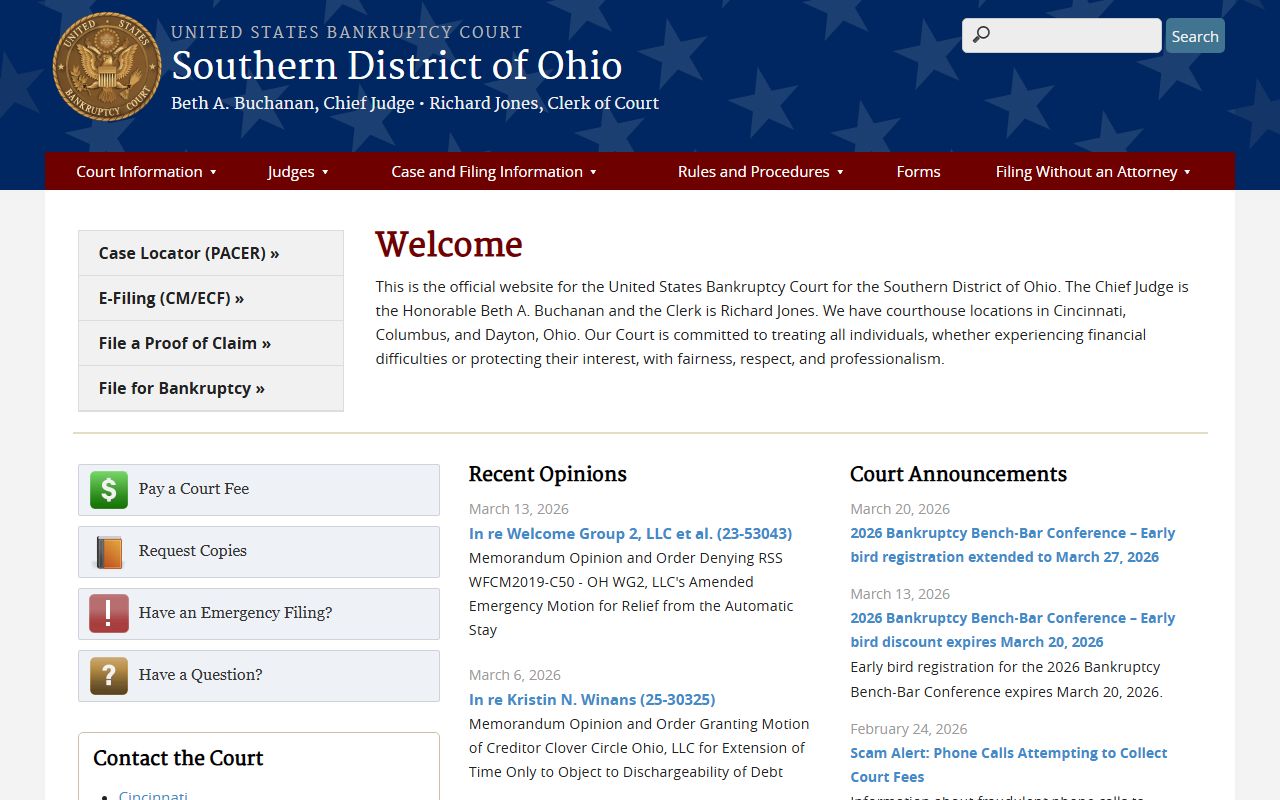
The site includes news, filing stats, and links to local rules and forms.
Bankruptcy Records and Credit Reports in Ohio
The bankruptcy court is not in charge of what shows on your credit report. It keeps the official record of the case, but it does not talk to credit bureaus or check what they post. If you see wrong information about a bankruptcy on your credit report, the court cannot fix it. You need to go through the credit reporting agencies directly.
The Federal Trade Commission can help. Call 877-FTC-HELP (382-4357) for guidance on credit report disputes. The Consumer Financial Protection Bureau is another option at 855-411-2372. Both agencies have tools on their sites to walk you through the dispute process. Ohio bankruptcy records are public under the law, but that does not mean the court controls how that data gets used by third parties.
Browse Ohio Bankruptcy Records by County
Ohio has 88 counties. Each one falls under either the Northern or Southern District for bankruptcy filings. Pick a county below to find local court details, contact info, and resources for bankruptcy records in that area.
Bankruptcy Records in Major Ohio Cities
Residents of Ohio cities file for bankruptcy at the federal court that covers their county. Pick a city below to find out which court handles bankruptcy records for that area.