
Search Morrow County Bankruptcy Records
Morrow County bankruptcy records are filed through the U.S. Bankruptcy Court for the Southern District of Ohio, Columbus Division. The county seat is Mount Gilead, and all federal bankruptcy cases for Morrow County residents pass through the Columbus courthouse. You can search for filings online through PACER, call the free McVCIS phone line, or visit the court in person. This page explains how to find Morrow County bankruptcy records, what they include, and where to get copies.
Morrow County Bankruptcy Records Overview
Morrow County Bankruptcy Court Information
Morrow County is part of the U.S. Bankruptcy Court for the Southern District of Ohio, Columbus Division. All bankruptcy petitions filed by Morrow County residents go to this federal court. The local county court system does not handle bankruptcy cases. The Southern District has seen filings rise 18.1% compared to the prior year, and recalled judges have been brought back to help manage the increase.
The Morrow County Clerk of Courts does not process bankruptcy filings. But the Clerk's office does keep records that can come up in a case. Sheri Clever serves as the Morrow County Clerk of Courts. The office is at 48 East High Street, Room 6, Mount Gilead, Ohio 43338. You can call 419-947-2085 or email sheri.clever@co.morrow.oh.us. The Clerk maintains records for the Common Pleas Court system and manages all court filings and related documents. Judgment liens, tax liens, and civil case records are on file with this office.
The Morrow County government website provides access to county office information and contact details.
From this site you can find office hours, phone numbers, and links to county departments.
How to Search Morrow County Bankruptcy Records
The main way to search Morrow County bankruptcy records is through PACER. Create a free account and search by name, case number, or Social Security Number. PACER covers all federal courts. The cost is $0.10 per page, capped at $3.00 per document. If your total stays under $30 in a quarter, there is no charge. Court opinions are always free.
The PACER Case Locator helps if you do not know which court handled a case. It pulls data from all federal courts and updates each night. For phone access, call the McVCIS line at (866) 222-8029. This service is free and runs around the clock. Say "Ohio" and then pick the right district to pull up case details. You can make up to 5 queries per call.
Under 11 U.S.C. § 107, bankruptcy records are public. Anyone can view them at reasonable times without charge. You do not need to be a party to the case to look at the file. Public terminals at the Southern District courthouse in Columbus let you view case files for free. Printing from those terminals costs $0.10 per page.
The PACER public access portal is where most people start when searching for federal court records online.
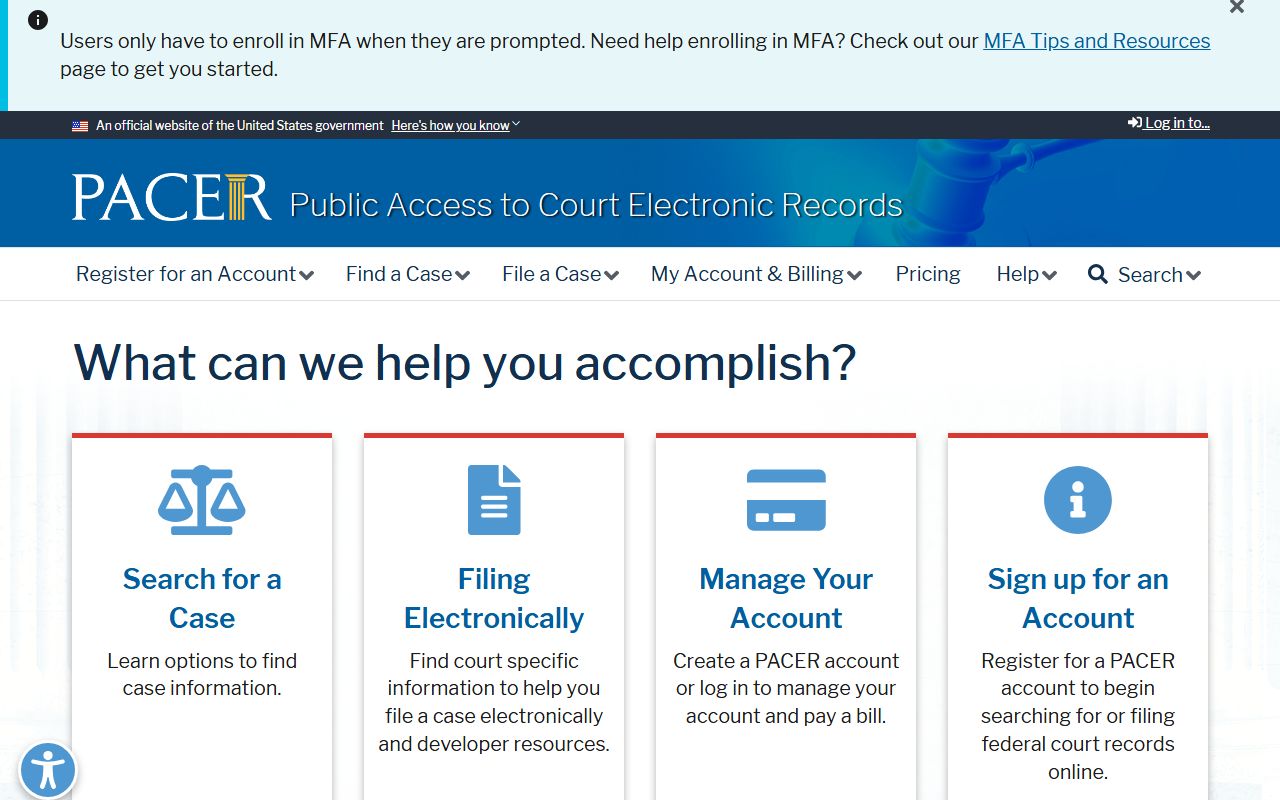
PACER lets you search any federal bankruptcy court in the country from one login.
Note: Morrow County bankruptcy records are federal records. The county Clerk of Courts keeps liens, judgments, and property records but not bankruptcy case files.
What Morrow County Bankruptcy Records Contain
A bankruptcy case file for a Morrow County resident holds a range of documents. The petition starts the case. It lists the debtor's name, address, and the chapter being filed. Schedules break down all assets, debts, income, and monthly expenses. The statement of financial affairs gives a broader look at the debtor's money over the past few years.
The discharge order is what most people search for. It shows which debts were wiped out when the case closed. Some debts cannot be discharged. Student loans, most tax debts, and child support will survive a bankruptcy. The file also holds motions, court orders, and the trustee's report. Chapter 13 cases include the repayment plan as well.
Under Fed. R. Bankr. P. 2002, creditors must get at least 21 days notice of the meeting of creditors. This notice is part of the case file. It goes out to every party owed money in the case. The meeting of creditors is where the trustee asks the debtor questions under oath about their finances.
Under Fed. R. Bankr. P. 9037, filers must redact personal data from public filings. Only the last four digits of Social Security numbers appear. Birth dates show just the year. Minors are listed by initials only. The filer is responsible for this redaction. The court does not check or fix it.
Local Records in Morrow County
Several Morrow County offices keep records that tie into bankruptcy cases. The Morrow County Recorder's Office maintains real estate records, deeds, mortgages, and liens. If a bankruptcy involves property in Morrow County, the Recorder has the land records you may need. These records are open for public inspection during business hours.
The Morrow County Court of Common Pleas handles civil cases, foreclosures, and criminal matters. Foreclosure cases often come up alongside bankruptcy filings, since a debtor may try to stop a foreclosure through Chapter 13. The Domestic Relations Division handles divorces and child support. The Probate Court manages estates, guardianships, and marriage licenses.
Mount Gilead is a small community. Most county services are in the courthouse area on East High Street. The Clerk of Courts handles filing, docketing, and preserving all court pleadings. This office also accepts bonds and files liens. If you need local court records tied to a bankruptcy case, the Clerk's office is the place to start.
Morrow County Bankruptcy Filing Fees
Filing fees for bankruptcy in Morrow County follow the federal schedule set by 28 U.S.C. § 1930. Chapter 7 costs $245. Chapter 13 costs $235. Chapter 11 runs $1,167 for most cases. Chapter 12 is $200 for family farmers and fishermen. You pay these fees to the clerk of the bankruptcy court when you file your petition.
Fee waivers exist. If you earn less than 150% of the federal poverty line and cannot pay in installments, you may qualify for a full waiver. The court can also let you pay in installments over time. Copies of Morrow County bankruptcy records through PACER cost $0.10 per page with a $3.00 cap per document. Viewing at a courthouse terminal is free, but prints cost $0.10 per page.
How to Get Copies of Morrow County Bankruptcy Records
For current cases, PACER is the fastest option. Log in, find the case, and download the documents you need. Each page costs $0.10, with a $3.00 cap per document. You can also go to the Southern District courthouse in Columbus and use a public terminal for free viewing.
For older Morrow County bankruptcy records, cases filed before 1999 may only exist in paper form. Contact the court or reach out to the National Archives at Kansas City. NARA stores all closed bankruptcy case files at that location. To make a request, provide the court name, case number, party names, and time frame. There is no search fee. Email kansascity.archives@nara.gov or call 816-268-8000. The research room is open Monday through Friday, 8 a.m. to 4 p.m., but you must book at least two business days ahead.
For local Morrow County records like liens and judgments, contact the Clerk of Courts at 419-947-2085. Staff can help you find what you need. The office is at 48 East High Street, Room 6, Mount Gilead, Ohio 43338.
Morrow County Bankruptcy Records Research Tools
The Federal Judicial Center Integrated Database is a free tool with case data for bankruptcy filings from 1970 to the present. It does not have actual documents, but it gives you filing dates, case types, and outcomes. This helps narrow your search before going to PACER. You can email the IDB team at IDBonline@fjc.gov with questions about the data.
Under Fed. R. Bankr. P. 5003, the clerk must keep a docket in each case and record every judgment, order, and activity. The clerk also maintains a claims register when there will be a distribution to unsecured creditors. These rules keep Morrow County bankruptcy records complete and accessible over time. The court also maintains an index of all cases that can be searched and certified upon request.
Nearby Counties
These counties border Morrow County. If you are not sure which county covers a specific address, check the location before searching for bankruptcy records.